Bulk chicken feed can mean a 5 lb starter pack or a 460 lb pallet, so the right supplier depends on flock size and delivery access. The best place to start is usually a local feed mill, but online suppliers can make sense when you need organic feed or pallet quantities. Here’s how to compare the options without paying for feed you can’t use before it gets stale.
We priced 5 bulk chicken feed suppliers named in current buying guides: Manna Pro, Scratch & Peck, Nutrena NatureWise, Mile Four, and Leland Mills. Manna Pro’s 5 lb bag costs $1.36 per pound, while Nutrena NatureWise’s 50 lb bag costs just $0.96 per pound. Freight moves the total further: Mile Four’s pallet shipping runs $0.80 to $1.15 per pound, while Leland Mills charges about $0.05 per pound. Bag size and delivery terms swing the per-pound cost by more than a dollar, so comparing delivered totals matters more than sticker prices.
Step 1: Search local feed mills and farm suppliers first
When you’re deciding where to buy chicken feed in bulk, search nearby feed mills before you price a shipped pallet. A local supplier may let you inspect the feed, pick up only what your flock needs, or place a standing order for your regular ration.
Start with your county, then widen the search to nearby farm towns. Search for feed mills, farm supply stores, grain mills, co-ops, and livestock feed dealers. Ask if they sell poultry feed by the bag, half pallet, tote, or bulk truck delivery.
Don’t ask only, “Do you sell chicken feed?” Ask questions that reveal how the order will work:
- What feed types do you keep in stock?
- What is the minimum order for bulk pricing?
- Can you order a full pallet or mixed pallet?
- Do you load customer vehicles?
- Can you deliver to a farm lane?
- How old is the current feed?
A local supplier may not publish bulk terms online. That doesn’t mean it lacks a good deal. Feed stores often price large orders after they know your location, feed type, and pickup needs.
Use our guide to finding a good animal feed store near you when you need to judge stock, staff knowledge, and bulk terms. We built The Easy Homestead for this exact gap. Search by ZIP code or county to find feed and seed suppliers near your farm, then check the listing details before you make the trip.
Local supply has one clear advantage. You can buy a smaller amount while you test a new ration. That matters if your hens reject a pellet size or if a mill changes its formula.
But local coverage may be thin in some counties. If The Easy Homestead has no listing near you yet, say so plainly and expand your search radius. A directory should help you find who exists, not pretend every area has five feed mills.
By now, you should have: a short list of local suppliers, their bulk minimums, and a clear answer on pickup or delivery.
Step 2: Compare bulk options from online feed suppliers
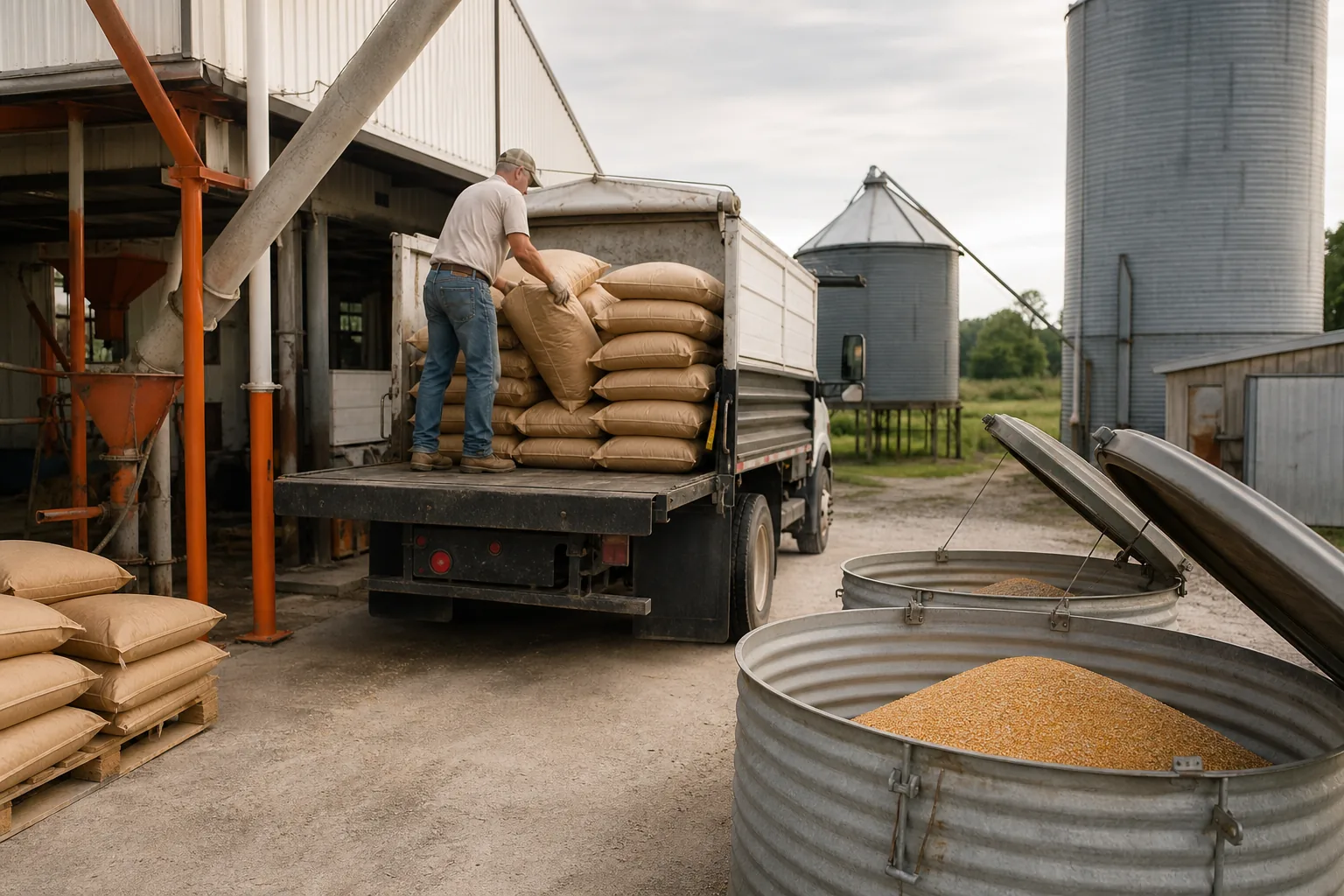
Online suppliers help when your local mill lacks the feed type you want. They also make it easier to compare order thresholds, though shipping can change the final cost by a wide margin.
Manna Pro lists a 5 lb starter crumble threshold. Scratch and Peck lists 10 lb for its bulk range. Nutrena NatureWise lists 50 lb for layer feed. Mile Four lists 460 lb, which is a quarter pallet.
That 460 lb number sounds like it belongs only to a large farm. It doesn’t. Mile Four lists both nationwide shipping and pickup in Minneapolis. A medium farm may split the order with another flock owner, while a larger farm may buy a full pallet.
Read the shipping page before you compare bag prices. Mile Four says buyers can enter an address in the cart to see shipping rates. It also states that buying two or more pallets can lower the per-pallet shipping cost.
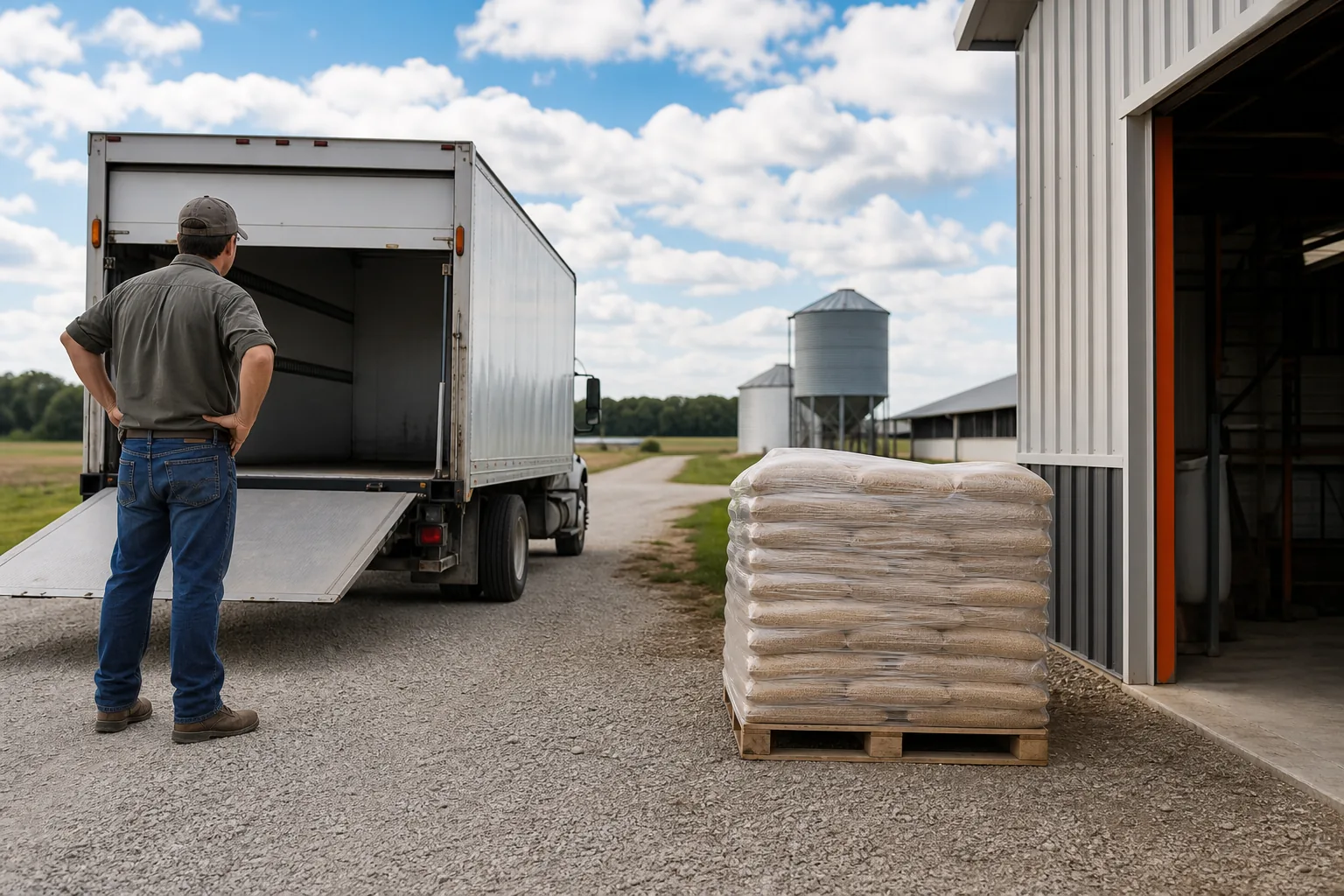
Residential delivery has its own limits. You may need a lift gate if you lack a loading dock or equipment that can remove a pallet. The driver won’t unload the bags one at a time or move the pallet inside your barn.
The supplier’s bulk feed shipping details spell out the delivery steps, including lift gate needs, truck access, and pickup terms. Read those details before you order. A cheap feed order becomes expensive if the truck can’t reach your drop point.
Also check the order window. Mile Four states that delivery can take 2 to 14 business days, with longer timing for farms farther from Minnesota or major metro areas. Someone must be present to accept the shipment.
Keep your comparison sheet plain. Record the feed type, threshold, bag size, freight charge, delivery method, and expected arrival window. If the supplier doesn’t disclose a field, write “not stated” and ask before paying.
Most suppliers in the sample don’t publish unit pricing. Scratch & Peck is the exception, with listed prices of $34.99 for Essentials Layer Pellets and $22.99 for Organic Starter Crumbles.
Online ordering works best when you already know the ration your flock needs. It’s a poor fit for guessing.
Step 3: Choose the right feed type and order quantity
Before you buy chicken feed in bulk, match the feed to the birds that will eat it. Then calculate how many pounds you’ll use before the feed reaches its storage limit.
Separate your flock by stage. Chicks need starter feed. Growing pullets need grower feed. Laying hens need layer feed with added calcium. Meat birds follow a different growth plan than layers.
Don’t switch feed in one sudden move. Mix the old and new feed, then raise the new share over several days. Watch appetite, droppings, and body condition during the change.
For a starting estimate, the supplied calculator research uses 0.25 lb per laying hen each day. That puts ten layers at about 2.5 lb each day. Your flock may use more or less based on breed, weather, production, forage, and feed waste.
Use this math:
- Daily feed equals bird count multiplied by daily pounds per bird.
- Monthly feed equals daily feed multiplied by 30.
- Order quantity should cover your planned use, not your storage capacity.
Let’s say you keep 20 layers and use 0.25 lb per bird each day. Your estimate is 5 lb per day, or about 150 lb per month. A 460 lb order would cover roughly three months before waste, weather, and changes in the flock.
That may be a good fit for a medium farm with dry storage. It may be a bad fit if the feed room gets hot, damp, or full of rodents.
Use a calculator as a starting point, then track actual use for two weeks. Weigh the feed at the start and end of the test. This gives you a better order size than a generic flock estimate.
For meat birds, feed use changes as the birds grow. If you raise birds for the freezer, include feed in the full production budget. Our meat chicken cost breakdown can help you place feed beside housing, processing, and labor.
Order the smallest bulk size that fits your flock’s use and storage. A lower cost per pound means little if half the feed goes stale.
Step 4: Compare delivered cost, minimums, and pickup terms
The delivered cost decides where to buy chicken feed in bulk. Compare the full order, not the feed price shown before freight.
Write down the feed total first. Add shipping, lift gate fees, taxes, and any pickup costs. Then divide the result by the pounds you’ll receive.
Mile Four lists a 460 lb quarter pallet and a 1,909 lb full pallet. It also says shipping rates pass through based on location. The same feed can land at a different cost for a farm near Minneapolis than for a rural home several states away.
Pickup can change the math. Mile Four lists Minneapolis pickup as a way to avoid shipping charges. That only helps if you can make the trip with a vehicle that can carry the order safely.
Leland Mills states that it provides local and nationwide delivery. Its bulk feed page also names backyard chickens and medium-sized farms as its main customer groups. That makes it worth checking when a local mill isn’t close enough for regular pickup.
You can use Leland Mills’ bulk feed page to check its current delivery coverage and poultry feed options. Treat delivery as a quote question, not a promise that every rural address has the same terms.
Make the drop point part of the order plan. A pallet truck needs room to reach the unloading spot and turn around. Soft ground, narrow lanes, steep grades, and low branches can all cause trouble.
| Buying setup | Good fit | Check before ordering |
|---|---|---|
| Local store pickup | You want a smaller order or quick restock | Stock date, bulk discount, and vehicle load capacity |
| Local mill delivery | You need recurring feed near the farm | Delivery radius, drop point, and minimum load |
| Quarter pallet shipment | You have a medium flock with dry storage | Freight, lift gate, and pallet handling |
| Full pallet shipment | You use feed at a high rate | Storage space, truck access, and order timing |
| Shared farm order | You want bulk pricing without holding the full load | Who receives the pallet and how you split it |
Ask for a written quote when the site hides freight. Confirm the number of bags, total weight, delivery method, and what happens if nobody can sign for the order.
There’s no useful “best” bulk size without your flock count and unloading setup. If the feed truck can’t reach your barn, the price per pound is beside the point.
Step 5: Confirm freshness, storage, and reorder timing
Bulk feed only saves money when you use it while it stays fresh. Ask for the mill date or lot information before you accept a large order.
Mile Four gives a one-year rule of thumb for shelf life and says cool, dark storage can extend it. That is a storage guide, not a reason to buy a year of feed for a small flock.
Pick a storage room that stays dry. Keep bags off the floor and away from damp walls. Use sealed bins when possible, but make sure the bins are clean before you fill them.
Rodents can damage feed fast. Check for torn bags, droppings, webbing, mold, damp clumps, or a sour smell. Don’t feed a questionable batch while you wait to see if birds will eat it.
Keep new feed separate from old feed. Mark each bin with the feed type and arrival date. Use the older batch first unless the mill gives you a different instruction.
Set your reorder point before the last bag. A useful system is to note the date when you open a bag, then weigh what remains after one week. That gives you a farm-specific use rate.
For a flock that uses 5 lb each day, reorder when your remaining supply covers your delivery window plus a short buffer. Don’t wait until the feeder is empty if your supplier needs two weeks to deliver.
Seasonal changes can shift the number. Birds may eat more in cold weather. Chicks may move from starter to grower. A new batch of pullets can change your monthly use overnight.
Bulk buying should fit your feed room as well as your flock. If you can’t keep the feed dry and protected, buy smaller loads more often.
Frequently asked questions about buying chicken feed in bulk
Where can I buy chicken feed in bulk near me?
You can buy bulk chicken feed near you from a local feed mill, farm supply store, grain co-op, or livestock dealer. Ask about pallet orders and delivery by county. The Easy Homestead lets you search feed and seed suppliers by ZIP code or county, which can save time when local results are scattered.
What counts as bulk chicken feed?
Bulk chicken feed has no single cutoff. In the reviewed supplier sample, thresholds range from 5 lb to 460 lb. Some sellers use a 10 lb or 50 lb minimum, while others sell quarter pallets. Ask whether “bulk” means a discount, a larger bag, a pallet, or a special order.
Is buying chicken feed in bulk cheaper?
Buying chicken feed in bulk can be cheaper per pound, but freight and waste can erase the savings. Compare the delivered total against local pickup. Also check how long your flock needs to use the order. A smaller purchase may cost less overall if a large load sits too long.
How much chicken feed should I buy at once?
Buy enough feed to cover your flock’s normal use through the supplier’s delivery window, plus a modest buffer. A common planning figure for laying hens is 0.25 lb per bird each day, but your flock may differ. Track actual use before committing to a quarter pallet or full pallet.
How should I store bulk chicken feed?
Store bulk chicken feed in a cool, dry, dark, rodent-resistant place. Keep bags off the floor and mark each bin with its feed type and arrival date. Inspect feed for dampness, mold, pests, or a sour smell. Rotate old feed first, and don’t order more than your storage plan can protect.
Conclusion
Start with a local feed mill, then compare online pallet prices only after you know your flock’s monthly use and your unloading limits. Search The Easy Homestead for a verified feed and seed supplier near you, and ask for a delivered quote before placing a large order. Find who you need. Trust what you find.